

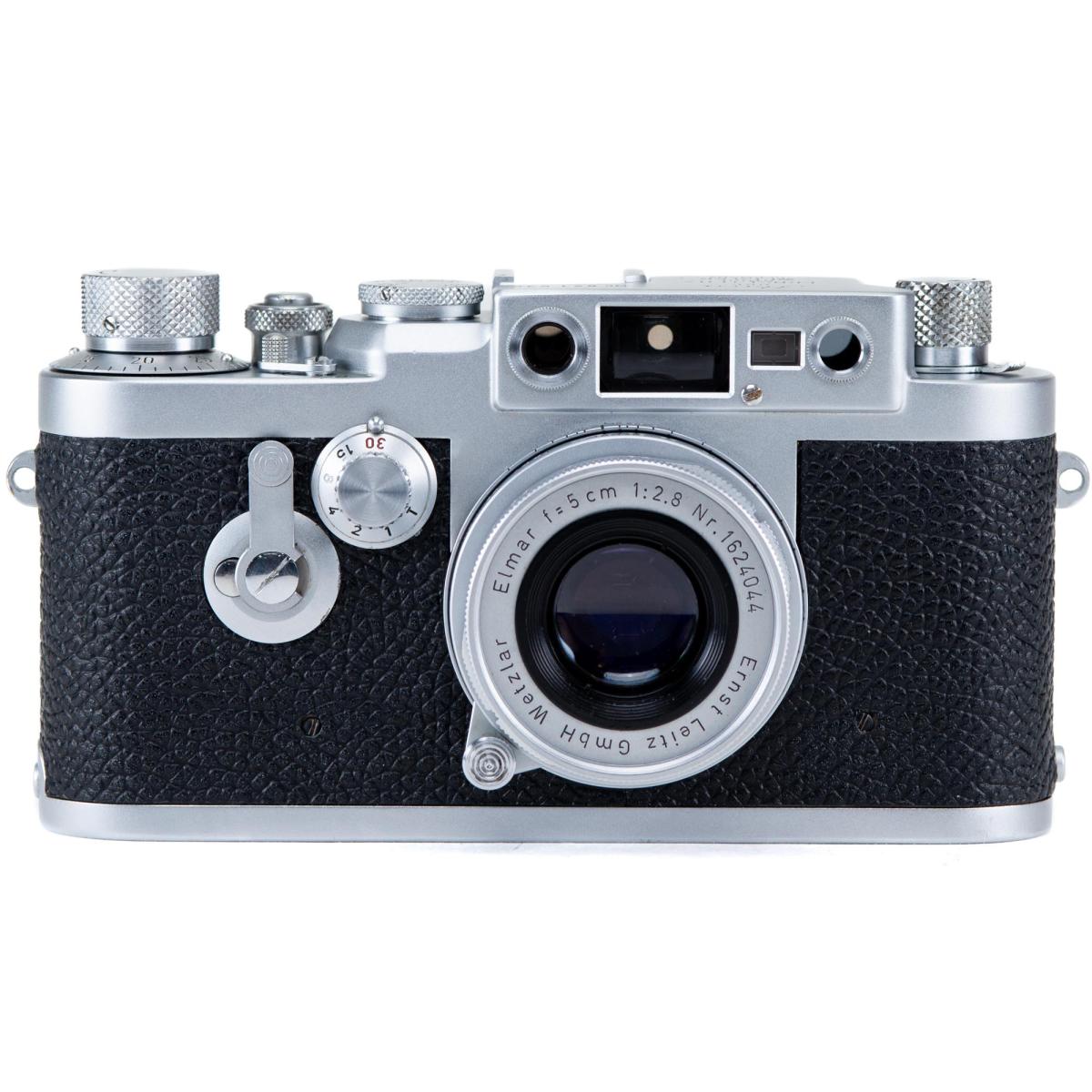
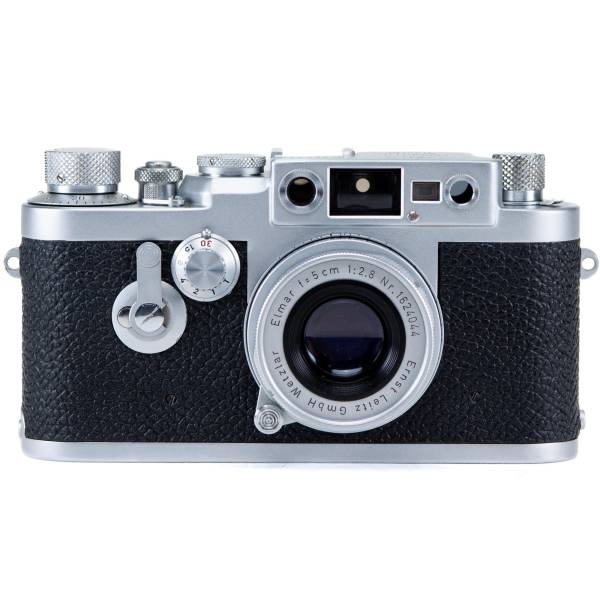
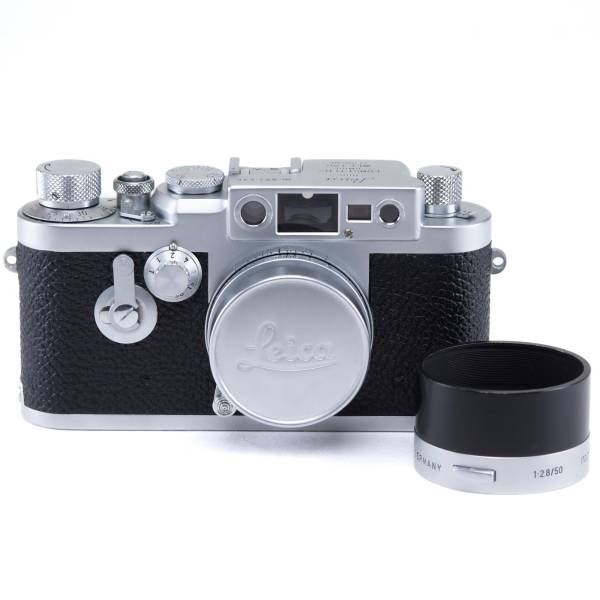
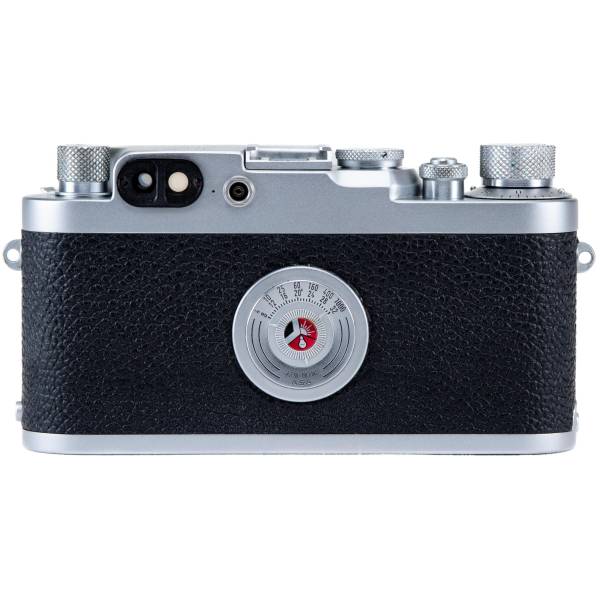
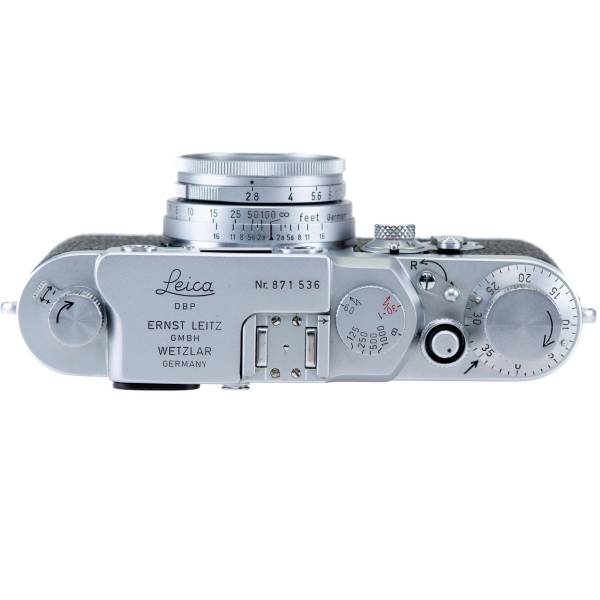
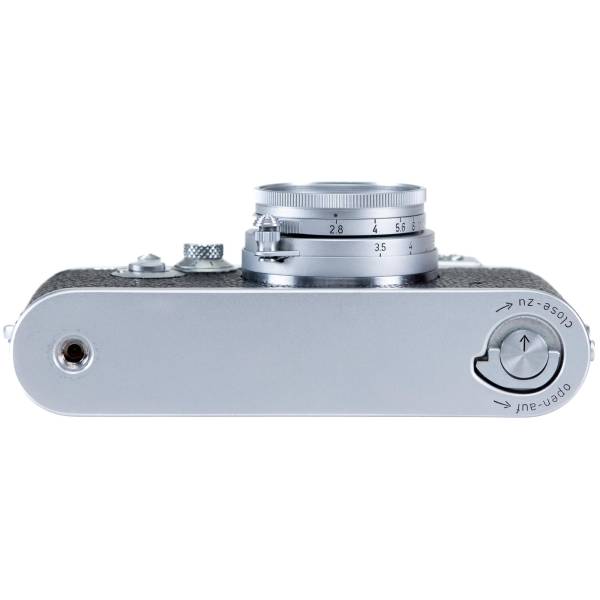
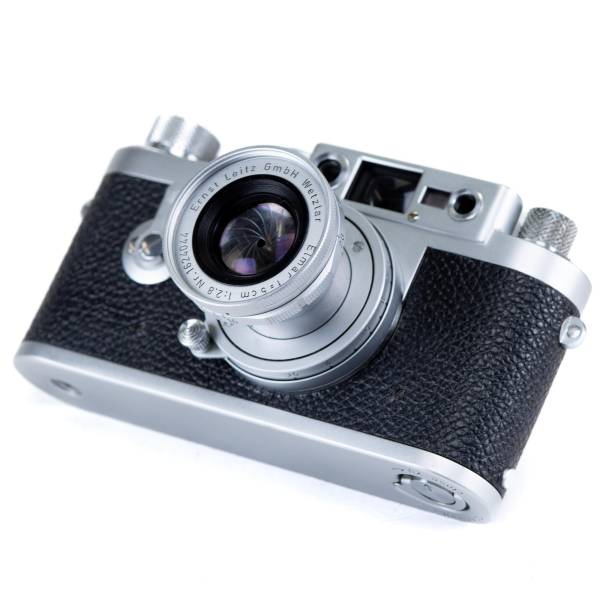
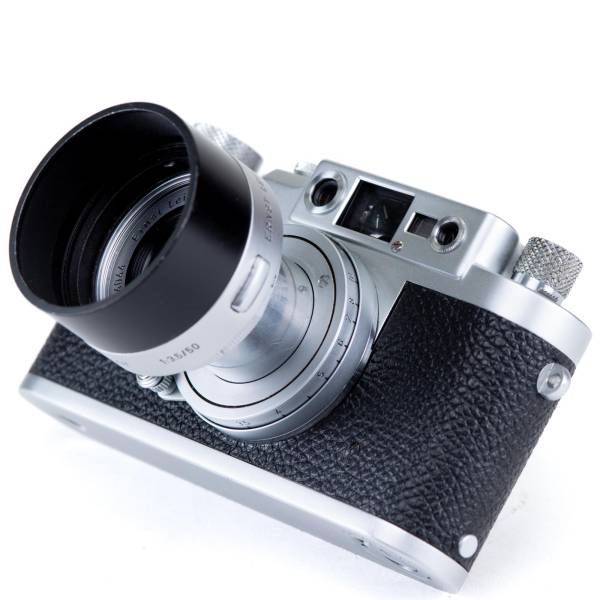
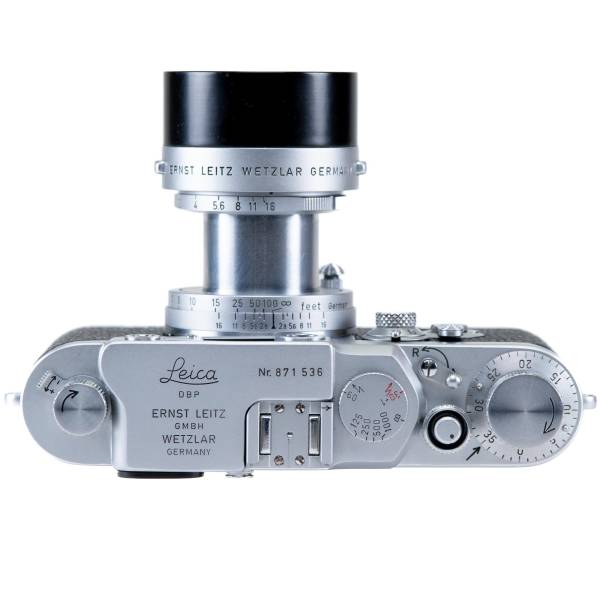
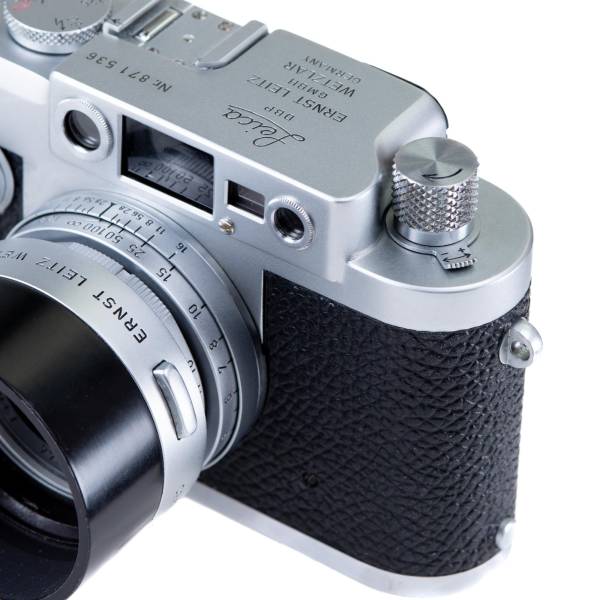
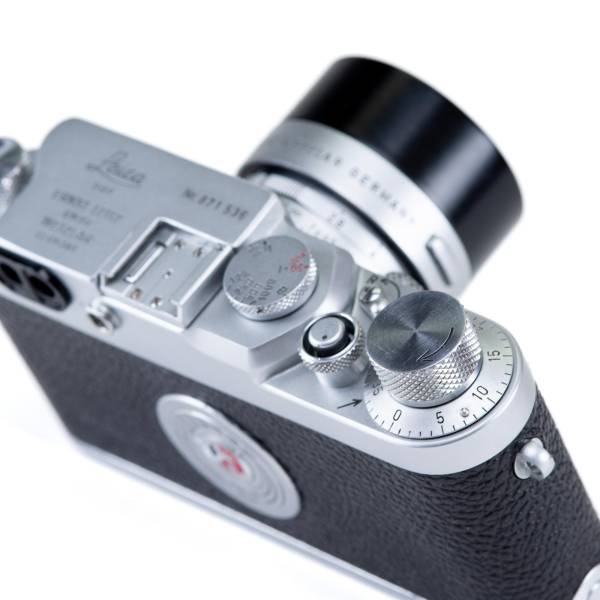
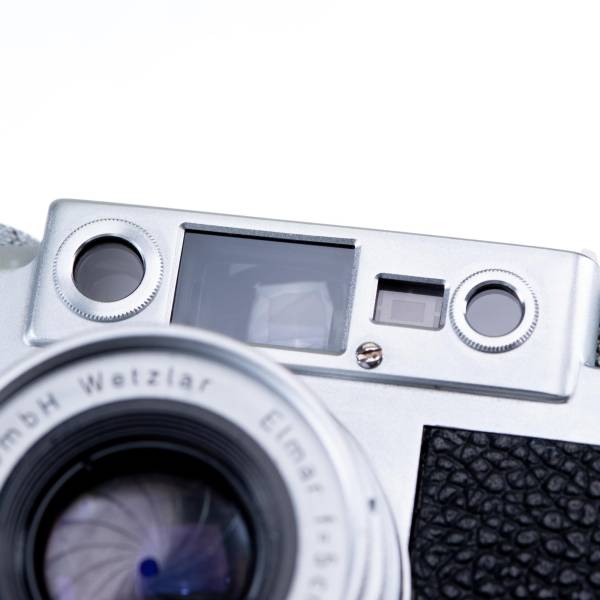
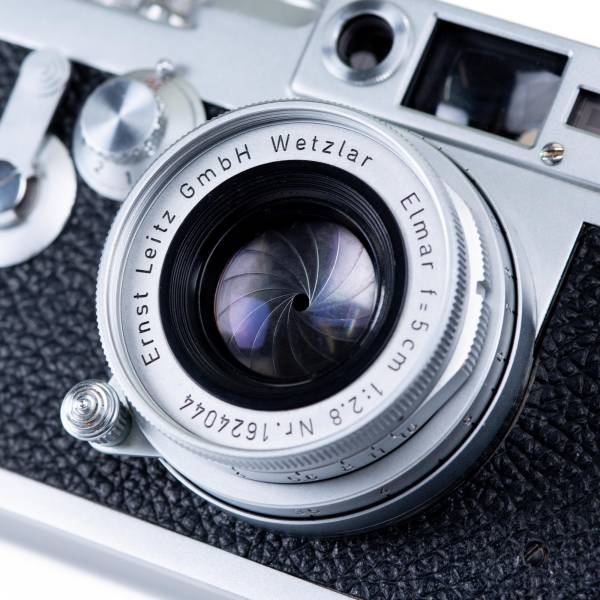
Leica IIIg with Elmar 5cm f2.8 - *A+*
GOOEL
Log-in to add this product to your favourites
Ask a question about this product
For Québec Residents — Disclosure under the Consumer Protection Act
In accordance with Québec’s Bill 29, Camtec Photo does not guarantee the availability of replacement parts, repair services, or information necessary to maintain or repair goods, unless otherwise specified by the manufacturer.
Description
Serial number: 871536/1624044
Made by: Ernst Leitz, Germany
Condition: A+ (Click here for details)
Accessories: Lens hood (ITOOY) and push on cap
Warranty: 3 months
Note: CLAd and new leatherette in May 2026
The Leica IIIg and the Elmar 5cm f/3.5: The Return of a Classic
There are objects that, by their very nature, tell a story. The Leica IIIg with its Elmar 5cm f/2.8 are among them. An iconic duo that, decades after production ended, is finding a new lease on life.
A lineage born for the street
To understand the IIIg, one must go back to the workshops of Ernst Leitz in Wetzlar in the 1920s, where engineer Oskar Barnack designed a compact camera using 35mm film, which until then had been reserved for cinema. This was the Leica I, released in 1925. Photography, until then a matter of tripods and bulky large-format cameras, suddenly became mobile and spontaneous. Henri Cartier-Bresson swore by his Leica, forging his concept of "the decisive moment" with it.
Over the years, the line evolved, Leica II, III, IIIa, up to the IIIf, each version bringing further refinements while retaining the same philosophy: compactness, robustness, German precision.
The IIIg, the discreet pinnacle of a lineage
Launched in 1957 and produced for only three years, the IIIg is the most accomplished of the screw-mount Leicas. Approximately 41,000 units were manufactured, making it today one of the most sought-after among the LTM cameras. Its redesigned viewfinder, featuring a bright-line frame and automatic parallax correction inspired by the M3, set it clearly apart from its predecessors. Shutter speeds ranged from 1 second to 1/1000th, flash synchronization was built-in, and its entirely mechanical body guarantees a longevity that few modern cameras can match.
The Elmar, the founding lens
Designed by optical engineer Max Berek and produced continuously from 1925 to 1961, the Elmar 5cm f/2.8 is the lens that accompanied the greatest images of the 20th century. Its optical formula, four elements in three groups, was simple and remarkably effective. Its collapsible mount remains one of its most appealing features: retracted into the body, the whole setup becomes astonishingly compact; extended with a quarter turn, it is ready to shoot in seconds.
Weighing only 111 grams, it is not a fast lens. But whatever it lacks in speed, it compensates with optical finesse and a tonal rendition particularly well-suited to black and white, precise without being harsh, gentle without being soft.
An invitation to slow down
Paired with the Elmar, the IIIg offers a slow, deliberate photographic experience. No autofocus, no automatic modes, no screen. Just the eye, the light, and the photographer's decision. In a world saturated with disposable images, bringing out this duo means reconnecting with what truly matters, rediscovering that photography is above all an act of presence.
It is in beautiful condition aesthetically and functionally. The camera and lens went through a CLA in May 2026. Shutter speeds are precise, film advance is smooth, Viewfinder is clean and clear and rangefinder is smooth. Leatherette was changed in May 2026
This is a beautiful piece of the history of photography, and of Leica’s history, that one can own, admire, and use to create personal images…
Technical Data
| Camera — Leica IIIg (1957) | |
|---|---|
| Type | 35mm rangefinder, Leica screw mount (L39) |
| Shutter speeds | T, 1, 1/2, 1/4, 1/8, 1/15, 1/30, 1/60, 1/125, 1/250, 1/500, 1/1000 s, B |
| Flash sync | At 1/60 and 1/30 s; self-timer included |
| Viewfinder | Parallax-corrected moving-frame (50mm + 90mm frames) |
| Weight | 415 g |
| Lens — Elmar 5cm f/3.5 (1956) | |
| Mount | Leica screw mount (L39); collapsible barrel |
| Focal length / Max aperture | 50mm / f/3.5 |
| Aperture range | f/3.5 – f/16 |
| Filter thread | A36 (early) / E39 (later) |
| Weight | Approx. 111 g |
| Optical formula | 4 elements in 3 groups (Tessar-type) |
Used Equipment Condition Guide
Like any passionate photography enthusiast, we know how a well-chosen camera body or lens can serve its owner for years. In that spirit, we carefully evaluate every piece of equipment we take in before putting it back on our shelves.
Buying used is an opportunity to acquire quality gear at a reduced price, or to enrich a collection with rare pieces that are sometimes impossible to find new. Each item is inspected, tested, then graded according to the chart below, and the assigned grade is shown on its product page.
Grading Scale
| Grade | Condition |
|---|---|
| A+ | Like new, no signs of wear. |
| A | Minimal signs of wear. |
| A- | Light signs of wear. |
| B | Visible signs of wear, fully functional. |
| C | Significant signs of wear, fully functional. |
| Open box | New equipment, at most displayed in-store. |